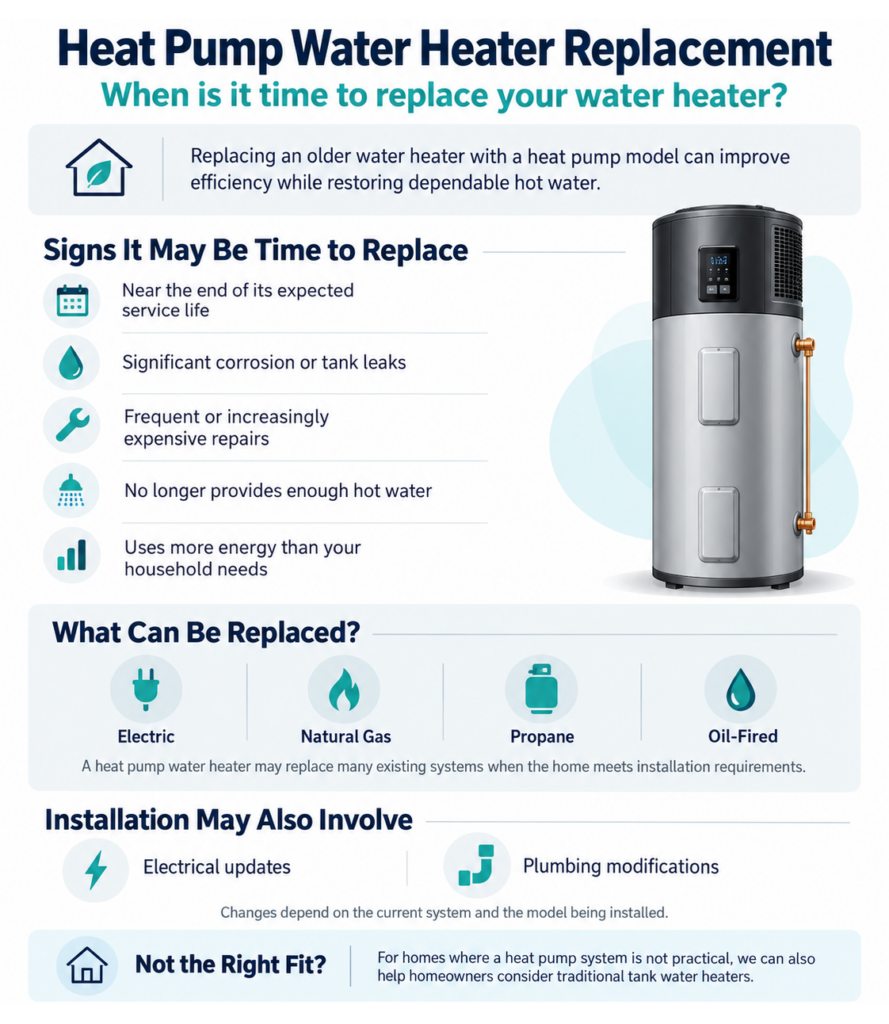
Heat Pump Water Heater Installation on Cape Cod

Energy-Efficient Hot Water for Your Cape Cod Home

A heat pump water heater offers an energy-efficient way to provide hot water for everyday household needs. Unlike conventional electric water heaters that generate heat directly, these systems transfer heat from the surrounding air into the water, using significantly less electricity in the process.

Upper Cape Heating & Cooling provides professional heat pump water heater installation, replacement, repair, and maintenance on Cape Cod. We help homeowners select efficient systems based on their hot water needs, available installation space, and existing plumbing and electrical setup.

Whether you’re replacing an aging water heater, looking to reduce energy consumption, or considering an upgrade to a hybrid electric water heater, our team can help you determine whether this technology is right for your home.

We serve homeowners throughout Bourne, Falmouth, Mashpee, Sandwich, and surrounding Upper Cape communities. Contact Upper Cape Heating & Cooling today to schedule a heat pump water heater estimate or service appointment.

What Is a Heat Pump Water Heater?

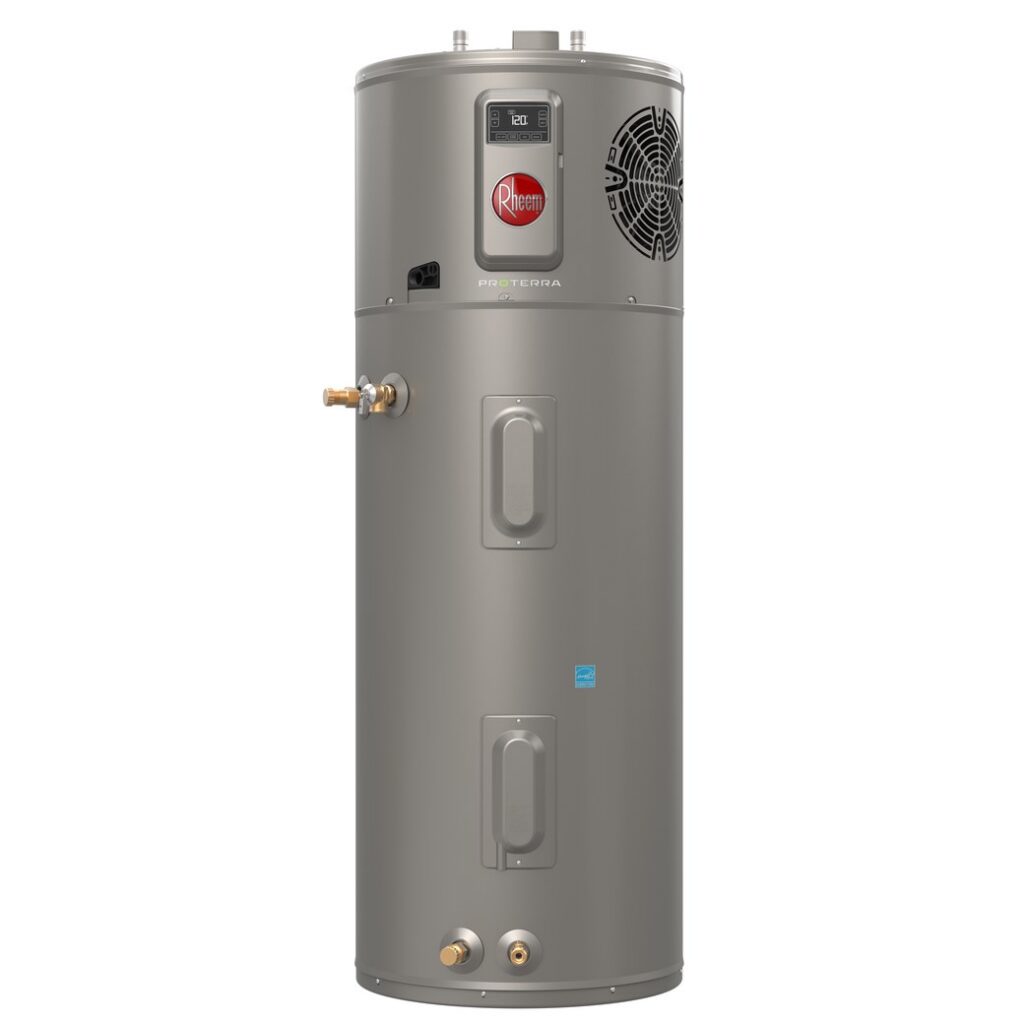
A heat pump water heater, also called a hybrid water heater, uses electricity to move heat from the surrounding air into water stored inside an insulated tank.

The system operates using technology similar to a refrigerator, but in reverse. A fan draws in surrounding air, and a refrigeration system captures its heat and transfers that energy into the water.

Most residential hybrid water heaters include:

  • An insulated hot water storage tank
  • A heat pump with a compressor and fan
  • A heat exchanger that transfers heat into the water
  • Electric backup heating elements on many models
  • Digital temperature and operating mode controls
  • An air filter and condensate drainage system

Many models offer different operating modes, allowing homeowners to prioritize maximum energy efficiency or faster hot water recovery when needed.

Because these systems move heat instead of relying entirely on electric resistance heating, they can use substantially less electricity than conventional electric storage water heaters.

mass save logo

Fill Out the Form Below

This field is for validation purposes and should be left unchanged.

Heat Pump Water Heater Installation Requirements

Heat pump water heaters have specific installation requirements that differ from those of conventional storage water heaters.

A professional evaluation helps determine whether the existing location can support efficient operation.

Available Airflow and Space

Heat pump water heaters need access to surrounding air to extract heat.

Basements, mechanical rooms, and larger utility spaces are often suitable locations. Smaller enclosed spaces may require additional ventilation, air transfer grilles, or approved ducting.

Room Temperature

These systems generally perform best in spaces that remain reasonably warm throughout the year.

An unfinished Cape Cod basement may be a suitable location, while an unheated garage or area exposed to freezing temperatures may require a different approach.

Electrical Requirements

Many hybrid water heaters use a dedicated 240-volt electrical circuit, although certain 120-volt models are also available.

The existing electrical supply must be evaluated to determine whether modifications are needed.

Condensate Drainage

Heat pump water heaters produce condensation during operation.

This moisture must be directed to an appropriate drain or condensate pump to prevent water accumulation around the equipment.

Equipment Clearance and Noise

Adequate clearance is necessary for airflow, maintenance, and access to system components.

Because the heat pump contains a fan and compressor, placement should also account for operating noise near living spaces.

Our team evaluates the installation area and equipment requirements before recommending a system.

Why Choose a Heat Pump Water Heater?

For Cape Cod homeowners looking to improve energy efficiency and reduce long-term water heating expenses, a heat pump water heater can offer several advantages.

1. Improved Energy Efficiency

Heat pump water heaters can be up to three times more efficient than conventional electric resistance water heaters.

By transferring existing heat rather than generating all of it directly, they require less electricity to produce the same amount of hot water.

2. Lower Water Heating Costs

Reduced electricity consumption can translate into meaningful savings on monthly utility bills, particularly for homes replacing older electric water heaters.

Actual savings depend on household hot water use, electricity rates, the existing water heating system, and how efficiently the new equipment operates.

3. Reliable Hot Water With Hybrid Technology

Many heat pump water heaters combine an efficient heat pump with conventional electric backup elements.

When hot water demand increases, the system can use supplemental heating to help replenish the stored supply more quickly.

This flexibility can be useful for households with multiple bathrooms or periods of higher water usage.

4. No On-Site Fuel Combustion

Electric heat pump water heaters do not burn natural gas, propane, or oil to heat water.

They eliminate the need for combustion exhaust venting at the water heater and can be a practical option for homeowners interested in reducing their reliance on fossil fuels.

5. Additional Cooling and Dehumidification

As a heat pump water heater extracts heat from surrounding air, it also produces cooler, drier air.

In suitable basements and utility rooms, this may provide a modest cooling and dehumidifying benefit during warmer months.

However, the effect on room temperature should be considered when choosing an installation location, especially during winter.

Water Heater ProTerra Heat Pump Electric 65 Gallon Hybrid Wifi 208/240 Volt
A room with pipes and a boiler.
A view of a room with pipes and water heater.
heat pump water heater

Choosing the Right Size Heat Pump Water Heater

Proper sizing is essential for providing enough hot water while keeping the system operating efficiently.

Residential heat pump water heaters commonly come in 50-, 65-, and 80-gallon capacities, although available sizes vary by manufacturer.

Unlike conventional water heaters, heat pump models may take longer to replenish hot water when operating in their most efficient mode.

When selecting a system, we consider factors such as:

  • Household size and daily hot water consumption
  • Number of bathrooms and showers
  • Bathtubs and other high-demand fixtures
  • Simultaneous hot water use
  • First-hour hot water delivery rating
  • Heat pump recovery rate
  • Availability of backup electric heating
  • Seasonal changes in household occupancy

A larger tank may allow the heat pump to meet peak demand without relying as frequently on electric backup heating.

Our goal is to recommend a properly sized system that balances hot water availability, energy efficiency, and household needs.

Expert HVAC Services on the Upper Cape

Elevate Your Comfort With Reliable Solutions From a MassSave® Approved Contractor.

Why Choose Upper Cape Heating & Cooling?

When you invest in a new heat pump, choosing the right HVAC contractor matters. Proper sizing, installation, and service all affect system performance and long-term comfort.

Homeowners choose Upper Cape Heating & Cooling because we provide:

  • Local service on Cape Cod and the Upper Cape
  • Professional heat pump installation and replacement
  • Ducted and ductless mini-split expertise
  • Honest recommendations
  • Reliable repairs and maintenance
  • Customized system design
  • Support with Mass Save® opportunities
  • Clean workmanship and attention to detail
  • Year-round heating and cooling solutions

We understand the needs of Cape Cod homes and provide HVAC solutions designed for local comfort.


Mass Save Rebates for Heat Pump Water Heaters

Massachusetts homeowners may qualify for incentives when replacing an existing water heater with an eligible energy-efficient heat pump model.

For 2026, the Mass Save program lists the following residential incentives:

  • $750 rebate for qualifying ENERGY STAR-certified heat pump water heaters
  • $750 rebate for qualifying 120-volt heat pump water heaters
  • $1,500 rebate for qualifying split-system heat pump water heaters

Eligibility depends on the selected equipment, participating utility, installation requirements, and current program guidelines.

Qualifying installations must meet Mass Save’s requirements, including installation by a licensed plumber.

As a Mass Save approved contractor, Upper Cape Heating & Cooling can help homeowners review available incentives and determine which equipment options may qualify.

Visit MassSave.com for current rebate information and eligibility requirements.

Heat Pump Water Heater FAQs

Yes. Heat pump water heaters can operate year-round when installed in a suitable location. Performance depends on surrounding air temperatures, and many hybrid models can use backup electric elements when additional heating is needed.

Many heat pump water heaters have an expected service life of approximately 10 to 15 years. Actual lifespan depends on equipment quality, installation conditions, water quality, usage, and maintenance.

Heat pump water heaters produce some noise from their fan and compressor. Sound levels vary by model, but many operate at levels comparable to common household appliances. Proper placement can help minimize disruption.

No. A heat pump water heater heats domestic water for showers, sinks, and appliances. A home heating heat pump provides space heating and, in many systems, air conditioning. Although they use similar heat-transfer technology, they serve different purposes.

Yes, in many homes. The installation must have sufficient space, appropriate electrical service, and proper drainage. A professional assessment can determine whether conversion is practical and what modifications may be necessary.